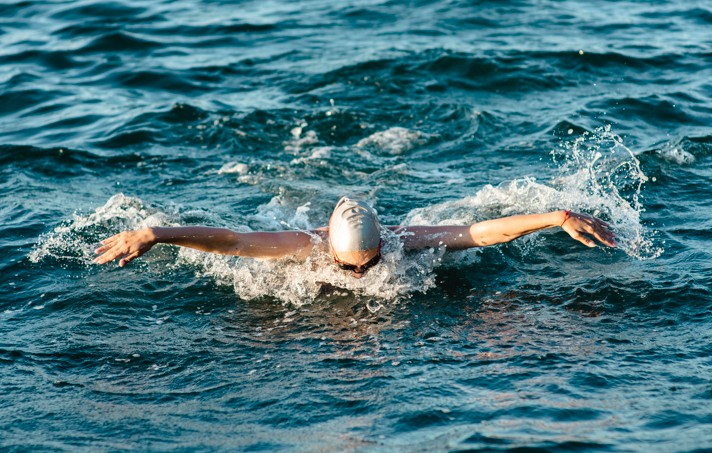
Stay safe around open water
Whenever you're near a river, lake, canal, reservoir or other open water, take a moment to look around and understand the risks.
Water that looks calm can still be dangerous.
There may be:
- sudden changes in depth
- strong currents
- cold water
- steep, slippery or unstable banks
- weeds, reeds or other vegetation
- rocks, branches, rubbish or other hazards below the surface
- structures such as weirs and locks that create dangerous currents.
Always follow local signs and safety instructions and stay away from areas where access is restricted.
Never jump or dive into water if you don't know how deep it is or what is underneath the surface.
And if water is frozen, never walk or play on the ice.
Exercising or walking near open water
You don't have to be swimming to be at risk.
If you're walking, running, cycling or spending time beside water:
- keep away from the edge, particularly where banks are steep, slippery or unstable
- stick to paths where possible
- take extra care when it is dark, wet or icy
- use well-lit routes if you're out after dark
- tell someone where you're going if you're heading somewhere remote
- carry a charged mobile phone
- take extra care after heavy rain, when rivers and streams may be higher and faster flowing than usual.
Avoid walking close to water if you have been drinking alcohol. Alcohol can affect your balance, judgement and ability to react if something goes wrong.
Children near water
Children should always be supervised by a responsible adult when they are in or around water.
Young children should be kept within arm's reach.
Teach children from an early age that open water is different from a swimming pool and that they should:
- stay away from the water's edge
- never enter open water without an adult
- never jump into rivers, canals, lakes or reservoirs
- never go onto frozen water
- tell an adult immediately if they see someone in difficulty.
If a ball, toy or other object goes into the water, leave it and tell an adult - don't go in after it.
Dogs near water
Don't go in after your dog.
Take extra care when walking dogs near rivers, canals, lakes and other open water, particularly where there are steep banks or fast-flowing water.
- Keep your dog under control and use a lead where conditions make it safer to do so.
- If your dog goes into the water and gets into difficulty, do not enter the water after them.
- Call for help and encourage your dog towards a safe place where it can get out.
Going into the water yourself could put you in danger too.