How the process works
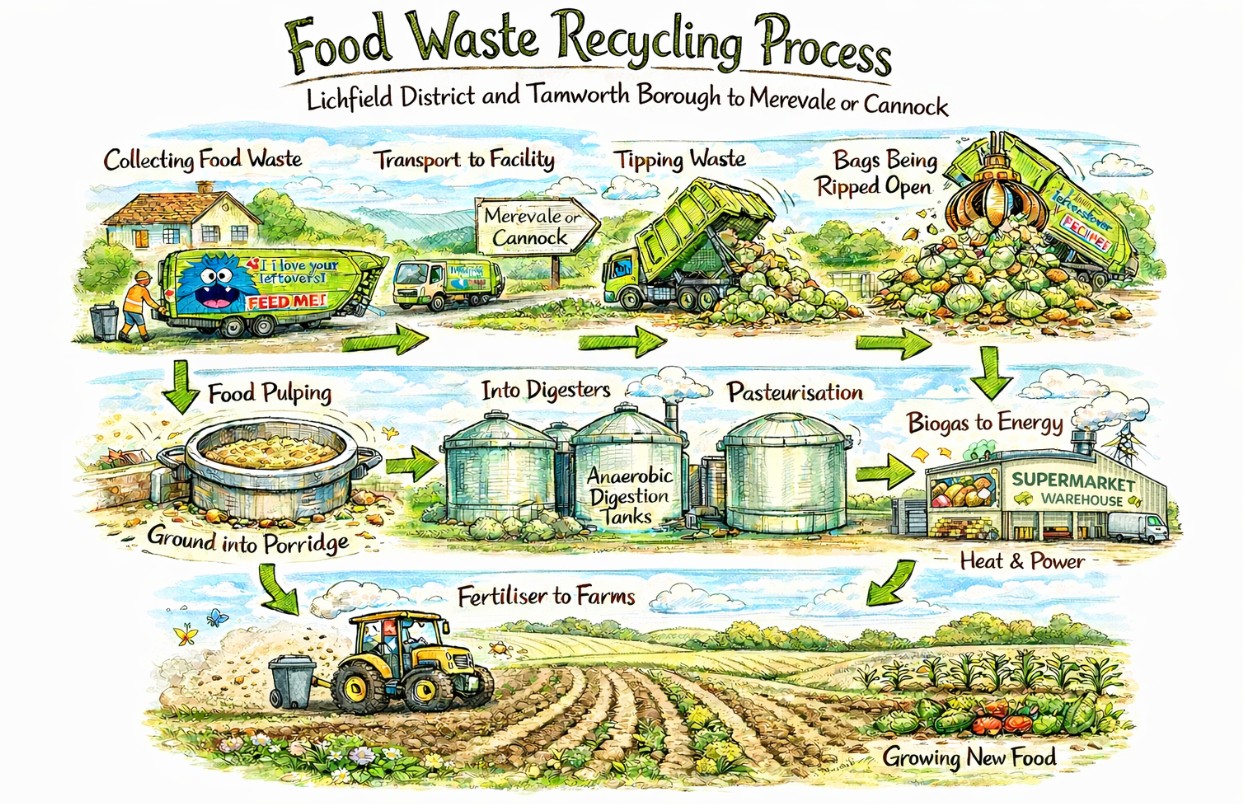
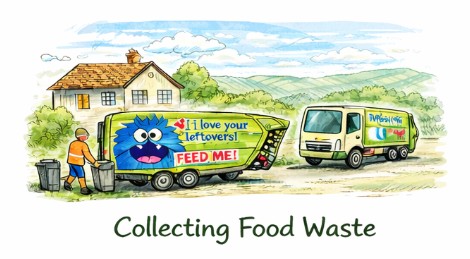
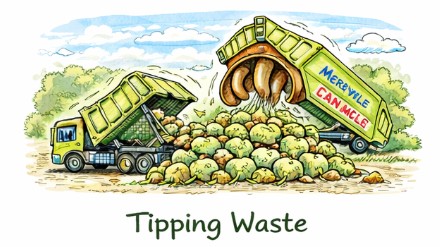
Once we’ve emptied your caddy, your food waste is taken to a specialist anaerobic digestion facility just over the county border in Merevale in Warwickshire or Cannock.
-
First, the food waste liners are removed leaving just the food to be processed.
-
The liners are washed, and sent to an energy-from-waste plant.
-
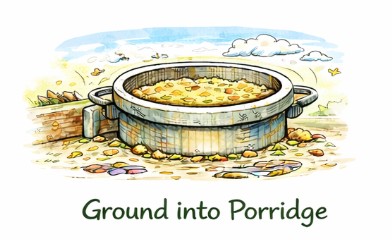
The food waste is then shredded and mixed with liquid to make a smooth, porridge-like mixture.
-
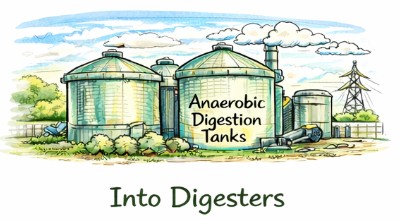
This mixture is pumped into large, sealed tanks called digesters.
-
Inside the tanks, natural bacteria break down the food waste over several weeks.
-
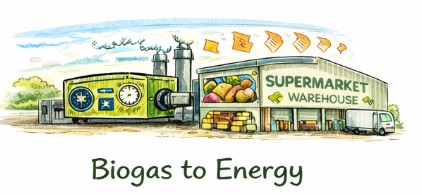
This produces biogas, a renewable energy made mainly of methane and carbon dioxide.
-
The biogas is used to generate electricity and heat for the site and nearby businesses.
-
What remains is a nutrient-rich liquid called digestate, which farmers use as fertiliser to improve soil and grow crops.
-
So full circle - some of the food fertilised by your scraps may end up back on your plate and back in your caddy - ready to do it all again!
Download a food waste colouring sheet