We know that business rates bills may change, and in some cases go up, from April 2026 as part of the national business rates revaluation.
We’re here to help you understand what this means for you and to make sure you get any support you’re entitled to.
This section explains what the revaluation is, what to expect, and where to get help if you’re worried about paying.
Your 2026 bill
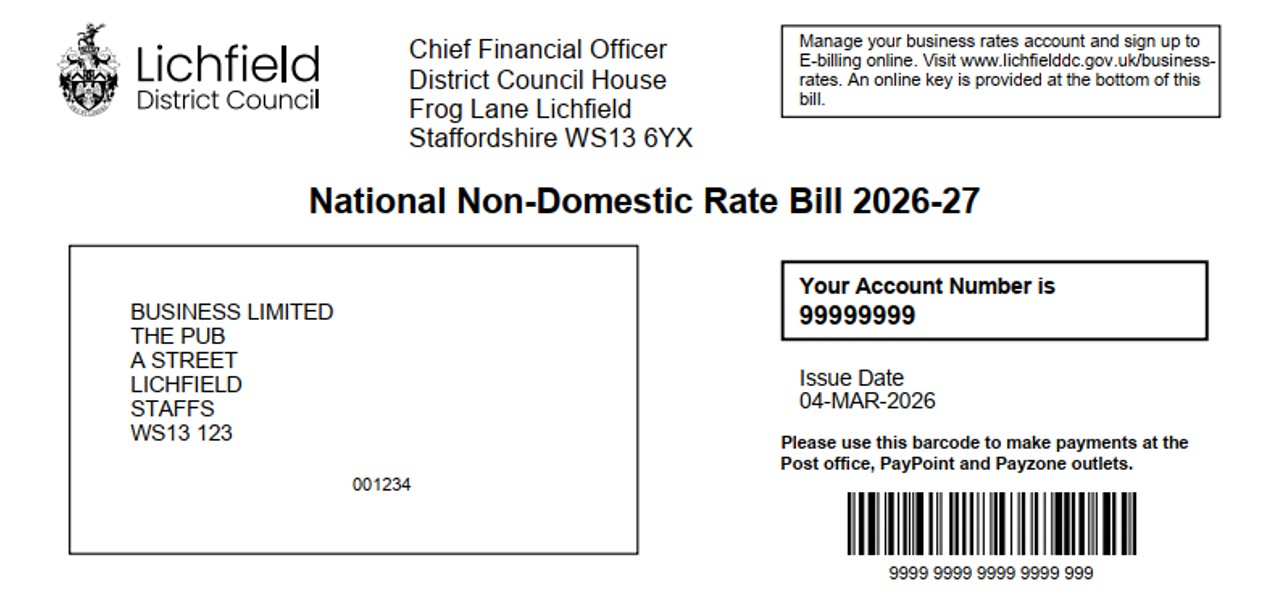
We send out business rates bills from March 2026, covering the period 1 April 2026 to 31 March 2027.
When you receive your bill, please check all the details carefully and make sure you are claiming all the business rates reliefs you are entitled to - find out more.
Your bill is based on your property’s rateable value, which is set by the Valuation Office Agency (VOA) - not the council.
If you think your rateable value is too high, you’ll need to contact the VOA directly - you can do this by registering for a business rates valuation account, where you can check and challenge your valuation - find out more.
If you think your multiplier is wrong, please complete our online form.
If you think you qualify for the pubs and live music venue relief but we haven't awarded it to you automatically, we will publish a form before the annual bills go out that will allow you to query this with us.
The government has published some useful worked examples of changes to business rates for small businesses and other rate reliefs - find out more.
How to get support
If your rateable value and multiplier is correct and you’re receiving all the reliefs you’re entitled to, but you’re worried about paying your bill, please contact us as soon as possible.
Equally if you are unsure what reliefs you are entitled to and want to check, contact us.
Our customer services team can talk to you about the advice, guidance and support that may be available. WhatsApp us anytime on 01543 308171 or call us on 01543 308000.
The earlier you get in touch, the more we may be able to help.
Visit the VOA's find a business rates valuation service to view your 2026 business rates valuation.

Are you claiming all you are entitled to?
Whether you are a small business, a pub or live venue, or are a charitable organisation, you could be eligible for a reduction in you business rates bill.
Visit our business rates relief section to find out more